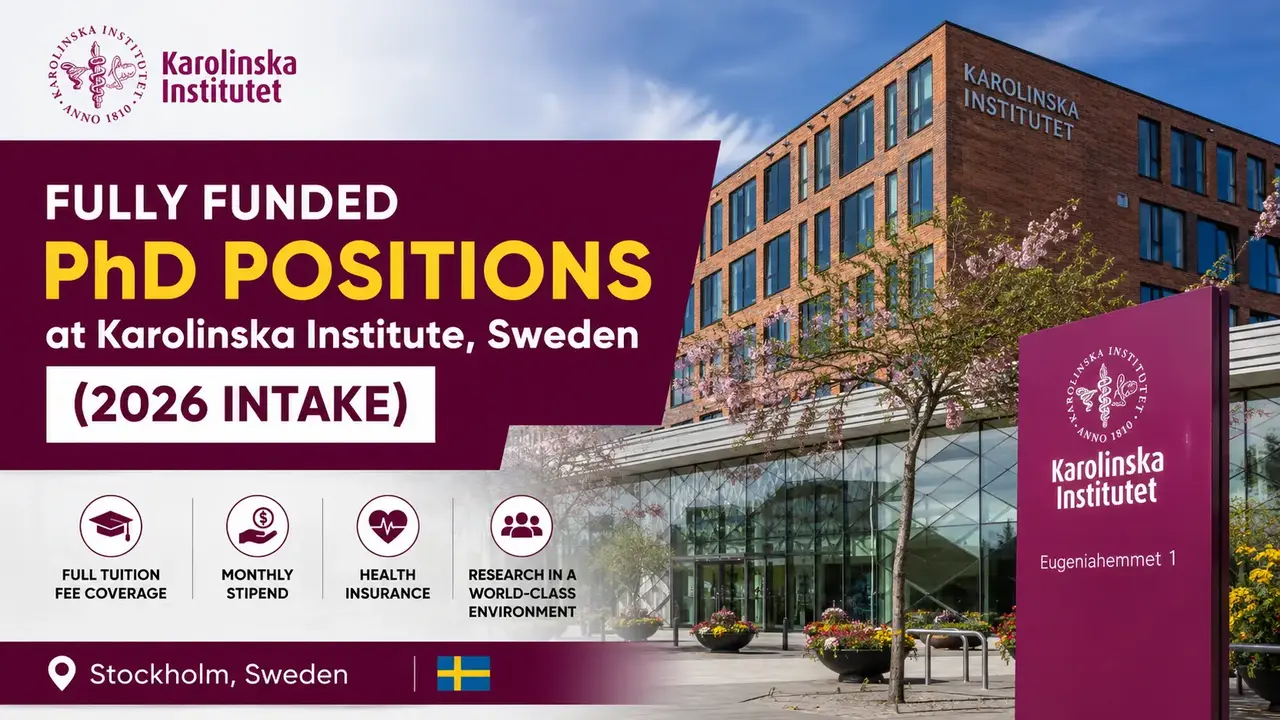
Fully Funded PhD Positions at Karolinska Institute, Sweden (2026 Intake)
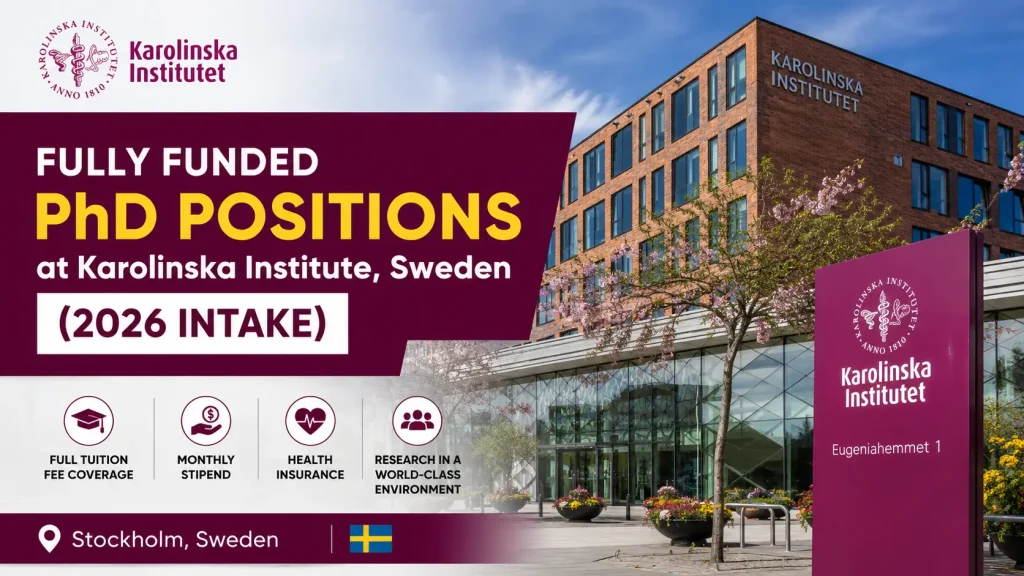
If you are an aspiring researcher seeking a fully funded doctoral position in one of the world’s most prestigious medical universities, Karolinska Institutet (KI) in Sweden should be at the very top of your list. Located in Stockholm—the vibrant capital of Sweden—KI is not only one of Europe’s largest and most renowned medical universities; it is also the institution responsible for selecting the Nobel laureates in Physiology or Medicine. Every year, KI recruits ambitious doctoral candidates across its diverse departments, offering them not merely a scholarship, but a genuine employment contract with competitive salary, social benefits, pension rights, and paid vacation.
This blog post provides an exhaustive overview of the current open doctoral (PhD) student positions at Karolinska Institutet, sorted by application deadline in descending order. The opportunities listed span cutting-edge disciplines, including single-cell proteomics, artificial intelligence in structural biology, cancer epidemiology, neurodegeneration, pediatric oncology, molecular virology, chromosome biology, public health informatics, and translational psychiatry. Whether your background lies in bioinformatics, epidemiology, molecular medicine, neuroscience, or global public health, there is likely a project that aligns with your scientific passions.
Below, you will find the complete table of positions, in-depth descriptions of each research area, detailed instructions on how to apply through the official Karolinska recruitment portal (Varbi), answers to six essential frequently asked questions, and insights into life as a doctoral student in Stockholm. Every official link mentioned is authentic and directs you to the university’s verified job announcement and application systems.
Check: Switzerland Government Scholarships 2026
Check: Scholarships in New Zealand Without IELTS 2026 | Fully Funded
About Karolinska Institutet: Where Medicine Meets Innovation
Founded in 1810 by King Charles XIII, Karolinska Institutet has evolved from a modest medical training school into a global powerhouse for biomedical research and education. Today, KI accounts for a substantial portion of all academic medical research conducted in Sweden and consistently ranks within the top 10 universities worldwide for medicine, pharmacy, and public health. Its close integration with Karolinska University Hospital—one of Scandinavia’s largest and most advanced university hospitals—ensures that doctoral students are never far from clinical translation. This unique proximity allows basic scientists to collaborate directly with clinicians, accelerating the journey from bench discovery to bedside application.
The university operates primarily across two campuses: Solna, situated north of Stockholm’s city center and home to departments such as Medicine, Medical Biochemistry and Biophysics, and Cell and Molecular Biology; and Huddinge (Flemingsberg), located south of the city, hosting departments like Medicine, Clinical Neuroscience, and Microbiology. Both campuses feature state-of-the-art core facilities, including advanced imaging centers, mass spectrometry units, high-performance computing clusters, and biosafety laboratories, all of which are accessible to doctoral students.
Internationalization is woven into KI’s DNA. Approximately 30 percent of doctoral students come from outside Sweden, representing more than 80 nationalities. The working language in most laboratories is English, and the university provides extensive support for international recruits, including relocation assistance, Swedish language courses, and integration programs. For anyone concerned about language barriers, rest assured: you can conduct world-class research, publish in international journals, and present at global conferences entirely in English.
The Swedish Doctoral System: Employment, Not Just Education
Before diving into the specific positions, it is essential to understand what a Swedish PhD entails, because it differs significantly from the graduate school models found in North America or parts of Asia. At Karolinska Institutet, doctoral education (Forskarutbildning) is a structured four-year program leading to a Doctor of Philosophy (PhD) or a Doctor of Medicine with a doctorate (Medicine Doktor). Crucially, you are not a “student” in the traditional tuition-paying sense; you are an employee of the university.
This employment status means you receive a monthly salary that progresses according to the Swedish collective agreement for doctoral students. Typically, the starting gross salary ranges from approximately SEK 32,000 to SEK 36,000 per month, increasing annually as you advance through your research milestones. Along with this salary comes full social security coverage, including health insurance, pension contributions, unemployment insurance, and generous parental leave provisions. You are also entitled to 25–35 days of paid annual vacation, depending on your age and contract terms.
The doctoral program comprises 240 ECTS credits. Roughly 60 percent of your time is dedicated to independent research within your specific project, while the remaining 40 percent involves coursework, literature reviews, seminars, and—if you wish—up to 20 percent departmental teaching or clinical duties (which can extend your contract to five years, offering additional income and pedagogical experience). You will be assigned at least two supervisors, one of whom serves as the principal investigator (PI) and primary scientific mentor. Every year, you will present your progress in a formal review, and your studies culminate in the writing of a doctoral thesis—either as a monograph or, more commonly in the life sciences, as a compilation of peer-reviewed articles—followed by a public defense (disputation).
This model provides exceptional financial security and professional development, allowing you to focus entirely on producing high-impact science rather than worrying about tuition fees or living stipends.
Featured Doctoral Positions: Sorted by Deadline (Descending Order)
The following table lists all currently advertised doctoral positions at Karolinska Institutet, organized with the latest application deadlines first. Each entry includes the precise position title, the hosting department, and the final date for submission.
| Position | Organisation / Department | Last Application Date |
|---|---|---|
| Doktorandplats: Atypisk parkinsonism i rörelse – gång, kognition och hjärnans arbete | Department of Neurobiology, Care Sciences and Society | 2026-08-31 |
| Doctoral (PhD) student position in spatial transcriptomics, bioinformatics, and cancer immunology as part of the national DDLS PhD program | Department of Medicine, Solna | 2026-08-31 |
| Doktorandplats i translationell psykiatri | Department of Molecular Medicine and Surgery | 2026-08-16 |
| Doctoral student in Clinical Genetics with focus on treatment resistance in chronic lymphocytic leukemia | Department of Molecular Medicine and Surgery | 2026-08-09 |
| Doctoral (PhD) student position in Epigenetics, Bioinformatics and AI Focused on Multiple Sclerosis | Department of Clinical Neuroscience | 2026-08-09 |
| Doctoral (PhD) student position in public health informatics – Mental Healthcare Digitalization and Work Environment | Department of Clinical Neuroscience | 2026-08-09 |
| Doctoral (PhD) student position in selection of DNA/RNA nanostructures as novel therapies | Department of Microbiology, Tumor and Cell Biology | 2026-08-05 |
| Doctoral (PhD) student position in AI-driven structural biology to uncover chaperone-amyloid interactions | Department of Medicine, Huddinge | 2026-08-03 |
| Doktorandplats inom cancer- och läkemedelsepidemiologi | Department of Medicine, Solna | 2026-08-03 |
| Doctoral (PhD) student position in public health with a focus on decision-making and health inequalities | Department of Global Public Health | 2026-08-03 |
| Doctoral (PhD) student position in Chromosome biology | Department of Cell and Molecular Biology | 2026-08-02 |
| Doctoral (PhD) student position in molecular virology | Department of Medicine, Huddinge | 2026-07-31 |
| Doctoral student position on the role of oligodendrocytes in Alzheimer’s disease progression and lifestyle interventions | Department of Neurobiology, Care Sciences and Society | 2026-07-31 |
| Doctoral (PhD) student position for studying new treatment strategies to prevent bone growth impairment and osteoporosis in childhood cancer survivors | Department of Women´s and Children’s Health | 2026-07-31 |
| PhD position – Late-onset psychosis – risk factors and comorbidities | Department of Medical Epidemiology and Biostatistics | 2026-07-28 |
| Doktorandplats inom barncancerforskning | Department of Women´s and Children’s Health | 2026-07-27 |
| Doctoral (PhD) student position in single-cell proteomics of mitochondrial disease | Department of Medical Biochemistry and Biophysics | 2026-07-26 |
Below is a detailed exploration of these research domains, grouped by thematic area. This will help you understand the scientific context, methodologies, and potential impact of each project.
Neurological Sciences, Aging, and Movement Disorders (Deadlines: July 31 – August 31, 2026)
Karolinska Institutet hosts one of the world’s most dynamic neuroscience research ecosystems, and these positions reflect the breadth of that strength.
Atypical Parkinsonism: Movement, Gait, Cognition, and Brain Function (Deadline: August 31, 2026)
Hosted within the Department of Neurobiology, Care Sciences and Society, this project addresses the complex clinical and neurobiological landscape of atypical parkinsonian syndromes. Unlike classical Parkinson’s disease, atypical forms—such as progressive supranuclear palsy (PSP) and multiple system atrophy (MSA)—present with rapid progression, poor response to standard dopaminergic therapy, and profound impacts on gait stability, cognitive function, and autonomic regulation. The doctoral candidate will likely employ advanced neuroimaging, quantitative gait analysis using wearable sensors, and neuropsychological batteries to map disease trajectories. The goal is not only to improve diagnostic accuracy but also to identify biomarkers that can guide future therapeutic interventions. For researchers fascinated by the intersection of clinical neurology, biomechanics, and cognitive neuroscience, this is an exceptional opportunity.
Oligodendrocytes in Alzheimer’s Disease and Lifestyle Interventions (Deadline: July 31, 2026)
Also situated in the Department of Neurobiology, Care Sciences and Society, this position challenges the traditional neuron-centric view of Alzheimer’s disease by focusing on oligodendrocytes—the myelinating glial cells of the central nervous system. Emerging evidence suggests that myelin breakdown and oligodendrocyte dysfunction occur early in the Alzheimer’s cascade, potentially accelerating cognitive decline. The project will investigate how lifestyle factors—such as physical exercise, diet, and cognitive engagement—modulate oligodendrocyte health, remyelination capacity, and neuroinflammation. Methodologies may include single-cell transcriptomics, advanced microscopy, and animal models combined with epidemiological data. This is ideal for candidates interested in glial biology, neurodegeneration, and preventive medicine.
Epigenetics, Bioinformatics, and Artificial Intelligence in Multiple Sclerosis (Deadline: August 9, 2026)
Based in the Department of Clinical Neuroscience, this project sits at the frontier of neuroimmunology and computational biology. Multiple sclerosis (MS) is a heterogeneous autoimmune disease influenced by genetic, epigenetic, and environmental factors. The doctoral student will integrate large-scale epigenomic datasets (e.g., DNA methylation, chromatin accessibility) with clinical and imaging data, applying machine learning and AI-driven algorithms to identify predictive biomarkers and novel therapeutic targets. This position demands comfort with bioinformatics pipelines, programming (likely in Python or R), and statistical modeling, but also offers training in clinical neuroscience and translational research.
Public Health Informatics: Mental Healthcare Digitalization and Work Environment (Deadline: August 9, 2026)
Also in the Department of Clinical Neuroscience, this position addresses one of the most urgent challenges in modern healthcare: the mental health crisis exacerbated by digital transformation and workplace stress. The project will evaluate how digital mental health tools—such as AI-driven screening apps, telepsychiatry platforms, and electronic health record analytics—impact both patient outcomes and the work environment of healthcare professionals. Using informatics frameworks, mixed-methods research, and health systems analysis, the doctoral student will generate evidence to guide policy and implementation science in Sweden and beyond.
Late-Onset Psychosis: Risk Factors and Comorbidities (Deadline: July 28, 2026)
This epidemiological study within the Department of Medical Epidemiology and Biostatistics focuses on psychotic disorders that emerge in later life. Unlike early-onset schizophrenia, late-onset psychosis carries distinct risk profiles, including neurodegenerative processes, sensory impairments, and social isolation. The candidate will analyze large-scale Swedish register data and cohort studies to identify modifiable risk factors, comorbidity patterns (e.g., cardiovascular disease, cognitive impairment), and outcomes. Strong quantitative skills in epidemiology, biostatistics, and register-based research are essential.
Pediatric Health, Cancer Research, and Translational Medicine (Deadlines: July 27 – August 16, 2026)
Children with cancer and survivors face unique long-term health challenges, and KI’s Department of Women’s and Children’s Health is a global leader in this field.
Childhood Cancer Research (Barncancerforskning) (Deadline: July 27, 2026)
This broad and impactful project within the Department of Women’s and Children’s Health seeks to advance our understanding of pediatric malignancies. Depending on the specific laboratory, research may focus on tumor genomics, immunotherapy development, drug resistance mechanisms, or the psychosocial dimensions of pediatric cancer care. The doctoral student will contribute to clinical trials or translational studies that directly influence treatment protocols at Karolinska University Hospital.
Bone Growth Impairment and Osteoporosis in Childhood Cancer Survivors (Deadline: July 31, 2026)
Modern cancer therapies save lives, but they often come with long-term skeletal consequences. Chemotherapy, radiation, and corticosteroids can severely impair bone mineral density and linear growth in survivors. This project aims to develop new treatment strategies—including pharmacological interventions, exercise protocols, and nutritional support—to prevent osteoporosis and growth impairment. The work integrates pediatric endocrinology, bone biology, and clinical epidemiology, offering a direct pathway to improving quality of life for thousands of survivors.
Translational Psychiatry (Translationell Psykiatri) (Deadline: August 16, 2026)
Hosted by the Department of Molecular Medicine and Surgery, this position bridges basic neuroscience and clinical psychiatry. The research may involve identifying molecular signatures of psychiatric disorders (such as depression, bipolar disorder, or schizophrenia) in blood or brain tissue, and then translating these findings into diagnostic tests or therapeutic targets. Candidates with backgrounds in molecular biology, genetics, or clinical psychology will find this project particularly compelling.
Clinical Genetics and Treatment Resistance in Chronic Lymphocytic Leukemia (CLL) (Deadline: August 9, 2026)
Also within the Department of Molecular Medicine and Surgery, this project targets one of the most common adult leukemias. Despite advances in targeted therapies (e.g., BTK inhibitors, BCL-2 inhibitors), a subset of patients develops resistance. The doctoral student will use genomic sequencing, functional assays, and patient-derived models to uncover the mechanisms driving resistance. The ultimate objective is to design combination therapies that overcome or prevent resistance, extending remission and survival.
Molecular Biology, Virology, Chromosome Dynamics, and Therapeutic Nanotechnology (Deadlines: July 26 – August 5, 2026)
These positions represent fundamental and applied life sciences at their finest.
Single-Cell Proteomics of Mitochondrial Disease (Deadline: July 26, 2026)
Mitochondrial disorders are a heterogeneous group of diseases caused by dysfunction in cellular energy production. The Department of Medical Biochemistry and Biophysics hosts this ambitious project, which applies single-cell proteomic technologies—likely involving advanced mass spectrometry—to map protein expression dynamics in individual cells affected by mitochondrial mutations. By resolving cellular heterogeneity that bulk analyses miss, the research aims to identify disease biomarkers, understand cell-type-specific vulnerability, and discover novel therapeutic entry points. This is an excellent opportunity for students with interests in proteomics, metabolomics, and rare genetic diseases.
Molecular Virology (Deadline: July 31, 2026)
The Department of Medicine in Huddinge offers this position focused on the molecular mechanisms of viral infection. Depending on the principal investigator’s focus, research may involve studying emerging viruses, viral replication complexes, host-pathogen interactions, or the development of broad-spectrum antivirals. Given the global importance of pandemic preparedness, this research carries significant public health relevance. Techniques may include viral genetics, high-content screening, and structural virology.
Chromosome Biology (Deadline: August 2, 2026)
Fundamental to life is the accurate transmission of genetic material during cell division. Hosted by the Department of Cell and Molecular Biology, this project investigates the molecular machinery that ensures chromosome segregation fidelity—processes involving kinetochores, spindle assembly checkpoints, and chromatin dynamics. Errors in these mechanisms lead to aneuploidy, a hallmark of cancer and congenital disorders. The doctoral student will likely use live-cell imaging, CRISPR-based genome editing, and biochemical assays to dissect these essential pathways.
AI-Driven Structural Biology: Uncovering Chaperone-Amyloid Interactions (Deadline: August 3, 2026)
Artificial intelligence is revolutionizing structural biology. This position in the Department of Medicine, Huddinge, leverages AI tools—such as deep learning models for protein structure prediction—to investigate how molecular chaperones interact with amyloid-forming proteins implicated in neurodegenerative diseases like Alzheimer’s and Parkinson’s. By combining computational predictions with experimental validation (e.g., cryo-EM, X-ray crystallography, or NMR), the project aims to design small molecules or peptides that stabilize chaperone function and prevent toxic protein aggregation. This is perfect for candidates excited by the convergence of AI, structural biology, and drug discovery.
Selection of DNA/RNA Nanostructures as Novel Therapies (Deadline: August 5, 2026)
Nanotechnology is opening new frontiers in medicine. Within the Department of Microbiology, Tumor and Cell Biology, this project explores the rational design and selection (likely via SELEX or similar directed evolution methods) of DNA and RNA nanostructures that can serve as targeted drug delivery vehicles, biosensors, or therapeutic agents themselves. The work integrates nucleic acid chemistry, cell biology, and tumor microenvironment studies. Students with strong chemical biology or synthetic biology backgrounds will thrive here.
Cancer Epidemiology, Spatial Transcriptomics, and Global Public Health (Deadlines: August 3 – August 31, 2026)
Data-driven science and health equity are central pillars of modern medicine.
Spatial Transcriptomics, Bioinformatics, and Cancer Immunology (National DDLS PhD Program) (Deadline: August 31, 2026)
This is not an ordinary PhD position; it is part of the national Data-Driven Life Science (DDLS) PhD program, a Swedish strategic initiative to train the next generation of data scientists in life sciences. Located in the Department of Medicine, Solna, the project focuses on spatial transcriptomics—technologies that map gene expression within intact tissue sections, preserving critical spatial context. In cancer immunology, this allows researchers to understand how immune cells interact with tumor cells in specific microenvironments. The doctoral student will develop and apply bioinformatics pipelines to analyze spatial omics data, integrating it with clinical outcomes to discover predictive biomarkers and therapeutic strategies. This position is highly competitive and ideal for candidates with strong programming skills and an interest in cancer systems biology.
Cancer and Pharmaceutical Epidemiology (Cancer- och Läkemedelsepidemiologi) (Deadline: August 3, 2026)
Also in the Department of Medicine, Solna, this project applies large-scale epidemiological methods to study cancer etiology, treatment patterns, and drug safety. By leveraging Swedish national health registers, biobanks, and clinical databases, the research generates real-world evidence on how pharmaceutical interventions influence cancer risk, progression, and survival. This is a vital field for evidence-based medicine and regulatory science.
Public Health: Decision-Making and Health Inequalities (Deadline: August 3, 2026)
Hosted by the Department of Global Public Health, this position tackles the social determinants of health. The doctoral student will investigate how policy decisions—regarding healthcare access, urban planning, or economic redistribution—affect health equity across different populations. Using decision-science frameworks, health economics, and qualitative methods, the research aims to inform equitable public health strategies both in Sweden and in low- and middle-income countries.
How to Apply: Official Links and Step-by-Step Instructions
All doctoral positions at Karolinska Institutet are advertised through the university’s official recruitment portal, known as Varbi. You must apply online; paper or email applications are generally not accepted unless explicitly stated in a specific announcement. Below are the official links and a structured guide to navigating the application process.
Official Application Portal and Job Listings:
- Karolinska Institutet Vacant Positions (Official Job Board):
https://ki.se/en/about/work-at-ki/vacant-positions - Direct Access to the Varbi Recruitment System:
https://ki.varbi.com/
Once on the KI vacant positions page, you can filter listings by “Doctoral students,” “Research,” or specific departments. Each position has its own unique reference number and a direct “Apply” button that links to the corresponding form in Varbi.
Step-by-Step Application Process:
- Identify Your Position: Use the table above and the KI job portal to locate the specific announcement. Note the reference number, the principal investigator’s contact information, and the exact deadline. Deadlines in Sweden are strictly enforced; applications received after 23:59 CET on the closing date are typically not considered.
- Check Eligibility Requirements: Most KI doctoral positions require you to hold a master’s degree (or equivalent 240 ECTS credits, typically four years of university study) in a relevant field such as medicine, biology, biochemistry, bioinformatics, public health, psychology, or engineering. Some clinical positions may require specific professional qualifications or Swedish language skills, though research-focused positions are almost always conducted in English.
- Prepare Your Documents: You will generally need:
- A comprehensive Curriculum Vitae (CV) detailing your education, research experience, publications, and technical skills.
- A personalized cover letter (1–2 pages) explaining your motivation for the specific project, your relevant skills, and your long-term career goals.
- Certified copies of your academic transcripts and degree certificates (translated into English or Swedish if necessary).
- Contact information for at least two academic references (professors or supervisors who can attest to your research potential).
- If applicable, proof of English proficiency (TOEFL, IELTS, or equivalent) and examples of scientific writing.
- Submit via Varbi: Create a profile in the Varbi system, fill in your personal and educational details, upload your documents in PDF format, and submit your application to the specific job announcement. Save your confirmation email.
- Contact the Principal Investigator (Optional but Recommended): While formal applications must go through the portal, many PIs appreciate a brief, professional email expressing your interest in the project. This can help establish a connection, but it does not replace the official application.
- Interview and Selection: Shortlisted candidates are usually invited for an interview—either in person at KI or via video conference. The interview panel typically includes the PI, co-supervisors, and a representative from the doctoral education administration. You may be asked to present your previous research and discuss your understanding of the project.
Official Links for Doctoral Education Information:
- Doctoral Education at KI (Program Structure, Rules, and Admission):
https://ki.se/en/education/doctoral-education - General Information for International Applicants:
https://ki.se/en/education/apply/doctoral-education
Funding, Salary, and Life in Stockholm
As previously emphasized, these are not unpaid internships or tuition-based programs. You will be employed by Karolinska Institutet. Your gross monthly salary starts at approximately SEK 32,000 and increases in steps—usually after one year, and again upon licentiate or half-time review—potentially reaching SEK 38,000–42,000 by the final year. From this salary, standard Swedish taxes apply, but you retain substantial net income, particularly given the high quality of public services.
Stockholm can be an expensive city, but doctoral students have access to student housing through the Stockholm Student Housing Foundation (SSSB), which offers affordable rental rooms and apartments. Additionally, KI provides staff benefits, including access to university sports facilities, subsidized healthcare, and professional development courses. The work-life balance in Swedish academia is strongly protected; overtime is discouraged, and you are encouraged to take your full vacation entitlement.
Social integration is facilitated through the KI International Staff and PhD student networks, regular department seminars, and the vibrant scientific community across Stockholm’s “Science City” in Solna and Flemingsberg.
Frequently Asked Questions (FAQs)
Q1: Are these PhD positions fully funded, or do I need to secure my own scholarship?
A: These are fully funded employment positions. You do not need an external scholarship. You will sign an employment contract with KI, receive a monthly salary, and be covered by Swedish social security, pension, and vacation benefits.
Q2: Do I need to speak Swedish to apply or conduct research?
A: For the research-focused positions listed here, the working language is English. You can write your thesis, publish papers, and attend international conferences in English. However, learning Swedish is highly beneficial for daily life in Stockholm and may be required for clinical positions involving direct patient contact.
Q3: What is the typical duration of these doctoral programs?
A: The standard duration is four years of full-time study and research. If you undertake 20 percent teaching or clinical duties, the contract can be extended to five years, with proportionally extended funding.
Q4: Can international students and non-EU citizens apply?
A: Absolutely. Karolinska Institutet actively seeks international talent. Non-EU citizens will need to apply for a Swedish residence permit for doctoral studies, and KI’s Human Resources department assists with this process upon employment.
Q5: How competitive are these positions, and what improves my chances?
A: These positions are competitive. Strong candidates typically have a relevant master’s degree, prior laboratory or research experience, a clear motivation letter tied to the specific project, and strong references. For bioinformatics and AI positions, demonstrated programming skills (Python, R, machine learning frameworks) are crucial.
Q6: Where can I find the specific application form for each position?
A: Visit the official KI vacant positions page at https://ki.se/en/about/work-at-ki/vacant-positions or go directly to https://ki.varbi.com/. Search for the position title or reference number, and click “Apply” to access the specific form.
Final Thoughts: Act Before the Deadlines Pass
The doctoral positions listed in this article represent some of the most exciting opportunities in contemporary biomedical science. From decoding mitochondrial diseases at the single-cell level to harnessing artificial intelligence for structural biology, from advancing cancer immunotherapy through spatial transcriptomics to addressing health inequalities through public health informatics—these projects are not just academic exercises; they are contributions to solving real-world health challenges.
The application deadlines range from July 26, 2026, to August 31, 2026, with several closing in late July. Given the importance of carefully tailoring your cover letter, gathering certified documents, and potentially contacting supervisors, we strongly recommend starting your application process immediately. Do not wait until the final day.
Visit the official Karolinska Institutet recruitment portal, identify the project that aligns with your expertise and passion, and submit your application through Varbi. If you are ready to embark on a four-year journey of discovery, professional growth, and scientific impact in one of the world’s leading medical universities, Karolinska Institutet is waiting for you.
Start your application today:
Karolinska Institutet Official Job Portal – Apply Here
Varbi Application System
Good luck with your applications—your future in world-class medical research may begin with a single click.