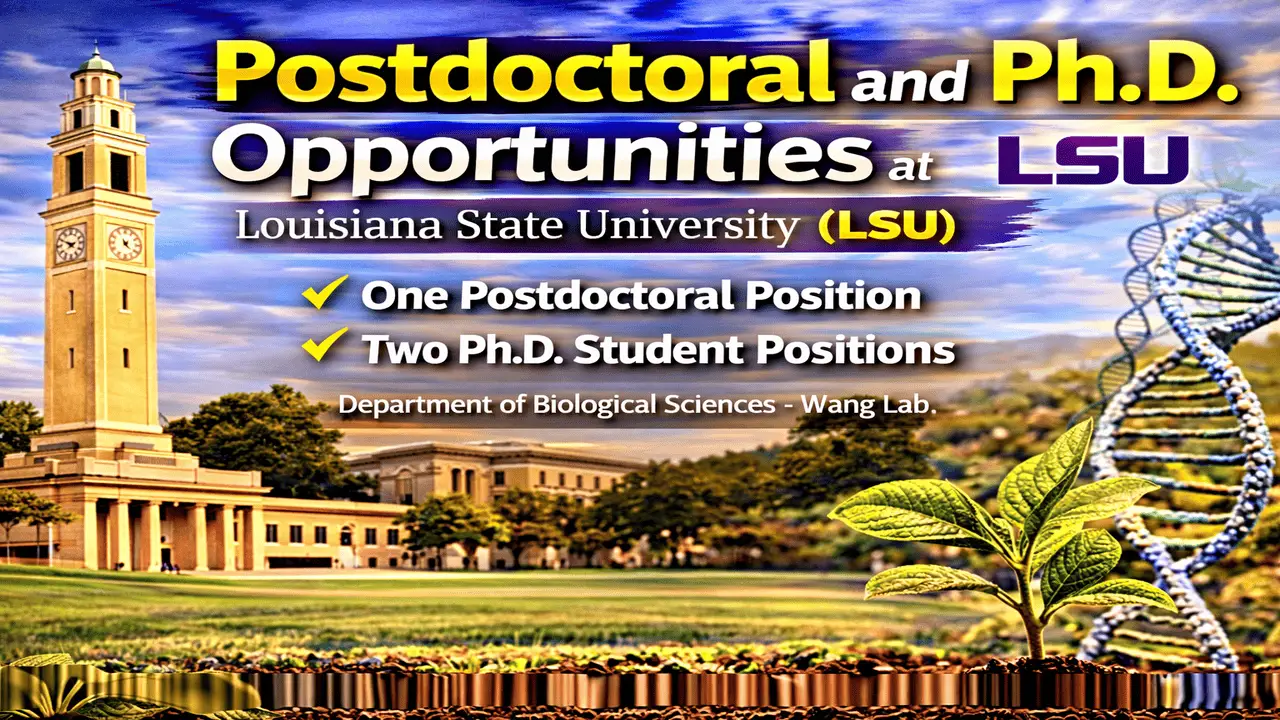
Postdoctoral and Ph.D. Opportunities at Louisiana State University (LSU) – Wang Lab (Fall 2026–Fall 2027)
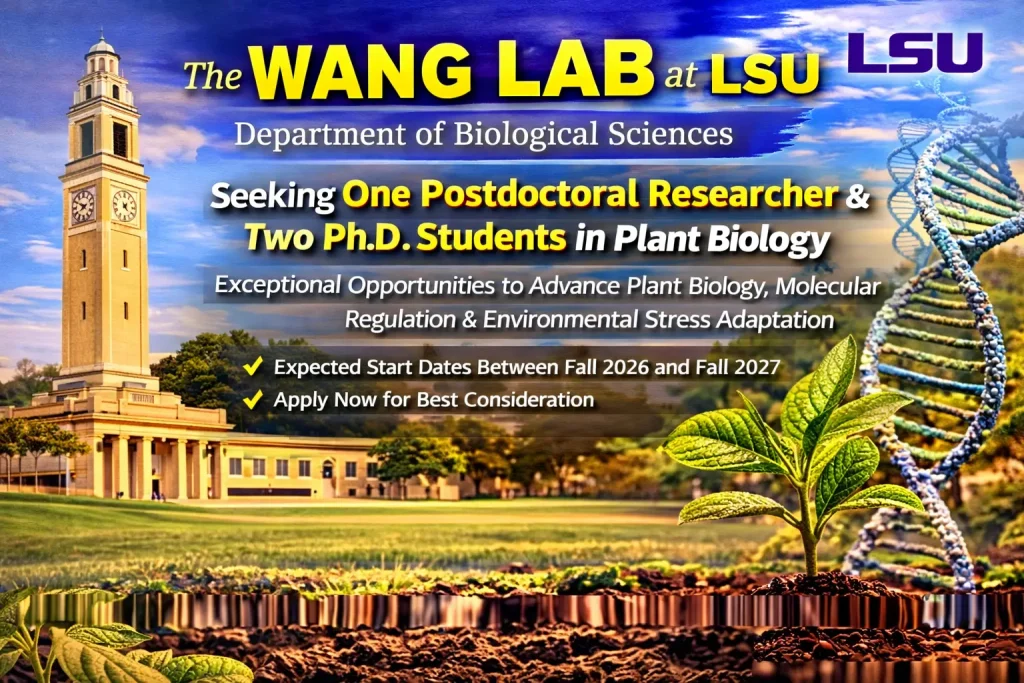
The Wang Lab at Louisiana State University (LSU), housed within the prestigious Department of Biological Sciences, is currently accepting applications for one postdoctoral researcher and two Ph.D. students. These positions represent an exceptional opportunity for talented researchers passionate about advancing our understanding of plant biology, molecular regulation, and environmental stress adaptation. Positions are expected to commence between Fall 2026 and Fall 2027, making now the ideal time to apply.
This article provides a comprehensive overview of these research opportunities, including detailed information about the Wang Lab’s research focus, the benefits of working at LSU, the application process, eligibility criteria, and answers to frequently asked questions. Whether you are a recent Ph.D. graduate seeking a postdoctoral appointment or a graduate student applicant eager to pursue doctoral research in plant molecular biology, this guide will help you understand how to become part of the Wang Lab team.
Click: University of Sydney Scholarships 2026 | Fully Funded BS, MS & PhD
About Louisiana State University (LSU)
A Leading Research Institution
Louisiana State University (LSU) is one of the United States’ premier public research universities and holds the prestigious designation as an R1 institution under the Carnegie Classification of Institutions of Higher Education. This classification is reserved for universities with the highest levels of research activity, placing LSU among the top research universities in the nation alongside institutions such as MIT, Stanford, and the University of California system.
Founded in 1860, LSU is the flagship institution of the Louisiana State University System and is located in Baton Rouge, Louisiana. The university serves over 30,000 students and employs more than 1,300 faculty members, many of whom are internationally recognized leaders in their fields.
Research Excellence at LSU
LSU is nationally and internationally recognized for its research strengths in multiple domains:
- Agriculture and Food Systems — LSU is a land-grant university with a strong tradition in agricultural research, serving Louisiana’s vital agricultural economy
- Energy and Environmental Sciences — With proximity to the Gulf of Mexico and the Mississippi River, LSU is a leader in coastal restoration, wetlands research, climate science, and energy innovation
- Health Sciences — LSU’s health research spans biomedical sciences, public health, veterinary medicine, and translational medicine
- Materials Science and Engineering — Cutting-edge research in advanced materials, nanotechnology, and chemical engineering
- Computational Sciences — LSU is home to high-performance computing facilities supporting big data and computational biology research
LSU’s annual research expenditures exceed $200 million, supported by funding from agencies including the National Science Foundation (NSF), National Institutes of Health (NIH), U.S. Department of Agriculture (USDA), Department of Energy (DOE), and numerous private foundations.
The Department of Biological Sciences
The Department of Biological Sciences at LSU is one of the largest and most dynamic departments on campus, with over 50 faculty members conducting research across the full spectrum of biological disciplines. The department is known for its collaborative environment, state-of-the-art research facilities, and commitment to mentoring the next generation of scientists.
Research in the department spans:
- Molecular and cellular biology
- Plant biology and biotechnology
- Ecology and evolutionary biology
- Microbiology and immunology
- Neuroscience
- Genomics and bioinformatics
The department offers Ph.D. and M.S. programs in Biological Sciences, providing rigorous training in both fundamental and applied biological research. Graduate students benefit from access to cutting-edge instrumentation, core facilities, and interdisciplinary research opportunities.
🔗 LSU Department of Biological Sciences:
https://www.lsu.edu/science/biosci/
About the Wang Lab
Research Focus and Mission
The Wang Lab is a vibrant, collaborative research group dedicated to understanding the fundamental molecular mechanisms that regulate plant growth, development, and adaptation to environmental stress. Directed by Dr. Ping Wang, the lab employs a multidisciplinary approach to tackle critical questions in plant biology with implications for global food security and sustainable agriculture.
As the world faces increasing challenges from climate change, population growth, and environmental degradation, understanding how plants respond and adapt to stress is more important than ever. The Wang Lab’s research directly addresses these challenges by uncovering the cellular and molecular processes that enable plants to survive and thrive under adverse conditions such as drought, heat, nutrient deficiency, and pathogen attack.
Key Research Areas
The Wang Lab’s research program is built around three major themes:
1. Kinase Signaling in Plant Stress Response
Protein kinases are enzymes that play central roles in cellular signaling by adding phosphate groups to target proteins, thereby regulating their activity, localization, and stability. In plants, kinase-mediated signaling pathways are critical for sensing and responding to environmental stresses.
The Wang Lab investigates:
- How specific kinases perceive stress signals
- The downstream signaling cascades activated by stress-responsive kinases
- Crosstalk between different kinase pathways
- The role of kinases in regulating gene expression, metabolism, and cellular adaptation
By identifying and characterizing key kinases involved in stress signaling, the lab aims to uncover new targets for improving crop resilience.
2. Autophagy and Cellular Homeostasis
Autophagy is a highly conserved cellular process in which cells degrade and recycle damaged or unnecessary components. In plants, autophagy is essential for maintaining cellular homeostasis, particularly under stress conditions where nutrients may be limited or cellular damage may accumulate.
The Wang Lab’s autophagy research focuses on:
- The molecular machinery that controls autophagy in plants
- How autophagy is regulated in response to different environmental stresses
- The interplay between autophagy and nutrient signaling
- The role of selective autophagy in degrading specific cellular targets (e.g., damaged organelles, protein aggregates)
Understanding autophagy regulation has important implications for improving nutrient use efficiency and stress tolerance in crops.
3. Stress Granules and RNA Metabolism
Under stress conditions, plants form stress granules — dynamic cytoplasmic assemblies composed of RNA and proteins that help regulate gene expression and protect RNA molecules from degradation. Stress granules are thought to serve as temporary storage sites for mRNAs that are not immediately needed for translation, allowing cells to conserve resources and prioritize the production of stress-protective proteins.
The Wang Lab investigates:
- The composition and dynamics of stress granules in plant cells
- The molecular signals that trigger stress granule formation and dissolution
- The role of stress granules in regulating mRNA translation and stability
- How stress granule dysfunction contributes to stress sensitivity
This research area represents a relatively new frontier in plant biology and has the potential to reveal novel mechanisms of post-transcriptional gene regulation.
Research Approaches and Technologies
The Wang Lab employs a comprehensive, integrative approach that combines multiple cutting-edge methodologies:
| Approach | Techniques and Methods |
|---|---|
| Molecular Biology | Gene cloning, CRISPR/Cas9 genome editing, transient and stable transformation, reporter gene assays, RNA interference |
| Genetics | Forward and reverse genetics, mutant screening, genetic mapping, complementation analysis |
| Biochemistry | Protein purification and characterization, enzyme assays, co-immunoprecipitation, protein-protein interaction studies, kinase activity assays |
| Cell Biology | Confocal microscopy, live-cell imaging, subcellular localization studies, fluorescence recovery after photobleaching (FRAP) |
| Advanced Imaging | Super-resolution microscopy, electron microscopy, multiphoton imaging |
| Multi-Omics | Transcriptomics (RNA-seq), proteomics (mass spectrometry), metabolomics, phosphoproteomics, single-cell RNA sequencing |
| Bioinformatics | Genomic data analysis, network modeling, systems biology approaches |
This multidisciplinary toolkit allows the Wang Lab to address biological questions at multiple scales — from individual molecules to whole plants — and to generate comprehensive, mechanistic insights into plant stress responses.
Model Systems
The Wang Lab primarily uses well-established plant model organisms, including:
- Arabidopsis thaliana — The premier plant model organism, with a fully sequenced genome, extensive genetic resources, and well-characterized molecular pathways
- Nicotiana benthamiana — A widely used model for transient gene expression, protein-protein interaction studies, and plant-pathogen interactions
- Potential expansion into crop species as research advances
These model systems offer powerful genetic and molecular tools, rapid generation times, and extensive community resources, making them ideal for mechanistic research.
Impact and Applications
While the Wang Lab’s research is fundamentally driven by curiosity about how plants work at the molecular level, it also has important applied implications. By identifying the genes, proteins, and pathways that control stress tolerance, the lab’s discoveries can inform efforts to:
- Develop climate-resilient crop varieties through traditional breeding or biotechnology
- Improve crop productivity under suboptimal growing conditions
- Reduce the need for chemical inputs (fertilizers, pesticides) by enhancing intrinsic plant defenses
- Support sustainable agriculture and global food security
The Wang Lab’s research thus bridges basic and applied science, contributing both to fundamental biological knowledge and to practical solutions for real-world challenges.
Available Positions
The Wang Lab is currently recruiting for three positions:
1. Postdoctoral Researcher (1 Position)
Position Type: Full-time postdoctoral research associate
Expected Start Date: Between Fall 2026 and Fall 2027 (flexible)
Duration: Initially appointed for 1–2 years, with the possibility of extension based on performance and funding availability
Responsibilities
The postdoctoral researcher will:
- Design and conduct independent research projects aligned with the lab’s research themes
- Develop and test hypotheses using molecular, genetic, biochemical, and imaging approaches
- Analyze and interpret complex data from multi-omics experiments
- Write manuscripts for publication in high-quality peer-reviewed journals
- Present research findings at national and international scientific conferences
- Contribute to grant writing and assist in securing external research funding
- Mentor and supervise graduate and undergraduate students
- Collaborate with other lab members and external collaborators
- Contribute to the intellectual and collaborative culture of the lab
Compensation and Benefits
| Benefit | Details |
|---|---|
| Annual Salary | Minimum $52,000 (in accordance with NIH postdoctoral salary guidelines; actual salary may be higher based on experience) |
| Health Insurance | Comprehensive health insurance coverage provided |
| Professional Development | Support for conference attendance, workshops, and training courses |
| Research Funds | Access to research funds for experiments, reagents, and equipment |
| Career Mentorship | Guidance on career development, grant writing, and job applications |
| Collaborative Environment | Access to LSU’s extensive research facilities, core services, and interdisciplinary networks |
2. Ph.D. Students (2 Positions)
Position Type: Full-time graduate research assistantship
Expected Start Date: Fall 2026 or Fall 2027
Duration: Typically 4–6 years to degree completion
Responsibilities
Ph.D. students will:
- Develop and execute original research projects under the guidance of Dr. Wang
- Complete required coursework in biological sciences and related disciplines
- Participate in lab meetings, journal clubs, and departmental seminars
- Present research at scientific conferences
- Write and publish research findings in peer-reviewed journals
- Assist in mentoring undergraduate researchers
- Develop skills in experimental design, data analysis, scientific communication, and critical thinking
- Work toward the completion of a doctoral dissertation
Compensation and Benefits
Ph.D. students in the Wang Lab receive full financial support, which includes:
| Benefit | Details |
|---|---|
| Stipend | Competitive annual stipend (currently around $28,000–$32,000 per year, subject to university guidelines) |
| Tuition Waiver | Full tuition coverage (in-state and out-of-state tuition fully waived) |
| Health Insurance | Comprehensive health insurance coverage |
| Teaching Assistantship | Support provided through teaching assistantships in the Department of Biological Sciences |
| Research Support | Access to research funds, equipment, and facilities |
| Professional Development | Funding for conference travel, workshops, and training opportunities |
| Career Mentorship | Guidance on career planning, networking, and professional skills development |
Ph.D. students are fully supported for the duration of their degree program, provided they maintain satisfactory academic progress and fulfill departmental requirements.
Qualifications and Requirements
For the Postdoctoral Researcher Position
Required Qualifications
- Ph.D. degree in plant biology, molecular biology, cell biology, genetics, biochemistry, or a closely related field
- The Ph.D. must be completed before the start date of the position
- Strong background in molecular and cellular biology
- Demonstrated ability to work independently and manage research projects
- Excellent written and oral communication skills in English
- A strong publication record in peer-reviewed scientific journals
- Commitment to scientific rigor, reproducibility, and ethical research practices
Preferred Qualifications
- Research experience in kinase signaling pathways
- Hands-on experience with plant model systems (Arabidopsis thaliana, Nicotiana benthamiana, or other model plants)
- Proficiency in advanced imaging techniques (confocal microscopy, live-cell imaging, super-resolution microscopy)
- Experience with CRISPR/Cas9 genome editing or other molecular genetic techniques
- Familiarity with multi-omics approaches (transcriptomics, proteomics, metabolomics)
- Experience in bioinformatics and data analysis (R, Python, or similar tools)
- A record of first-author publications in high-impact journals
- Experience in grant writing or contributing to successful funding applications
For Ph.D. Student Positions
Required Qualifications
- Bachelor’s degree or Master’s degree in biology, plant science, molecular biology, genetics, biochemistry, biotechnology, or a related field
- Strong academic record (typically a GPA of 3.0 or higher on a 4.0 scale)
- Demonstrated interest in plant biology, molecular biology, or stress biology (through coursework, research experience, or independent projects)
- Strong motivation for pursuing doctoral-level research
- Ability to work both independently and collaboratively in a team environment
- Excellent communication skills (written and oral)
- Proficiency in English (TOEFL or IELTS scores required for international applicants)
Preferred Qualifications
- Prior research experience in a laboratory setting (through undergraduate or master’s research, internships, or employment)
- Familiarity with basic molecular biology techniques (cloning, PCR, gel electrophoresis, protein expression, etc.)
- Experience working with plant systems (Arabidopsis, tobacco, rice, or other species)
- Knowledge of cell biology, genetics, or biochemistry
- Experience with microscopy or imaging
- Coursework or experience in bioinformatics or computational biology
- A strong letter of recommendation from a research advisor or mentor
Essential Skills and Attributes
All candidates (postdoctoral and Ph.D.) are expected to demonstrate the following:
| Attribute | Description |
|---|---|
| Research Motivation | Genuine passion for understanding biological questions and solving scientific problems |
| Independent Thinking | Ability to formulate hypotheses, design experiments, and interpret results critically |
| Teamwork and Collaboration | Willingness to work effectively with others, share knowledge, and contribute to a positive lab culture |
| Communication Skills | Ability to clearly present research findings in writing and oral presentations |
| Adaptability | Openness to learning new techniques, troubleshooting experiments, and adapting to new challenges |
| Ethical Conduct | Commitment to scientific integrity, data transparency, and responsible research practices |
| Time Management | Ability to manage multiple projects, meet deadlines, and balance research with other responsibilities |
How to Apply
Interested candidates should submit their application materials as a single PDF file to Dr. Ping Wang.
Application Materials
For Postdoctoral Applicants
Your PDF should include the following components, in this order:
- Cover Letter (1–2 pages)
- Introduce yourself and explain your interest in the Wang Lab
- Describe your research background and relevant experience
- Highlight your key accomplishments, publications, and technical skills
- Explain why you are interested in the lab’s research and how your expertise aligns with the lab’s goals
- Outline your career goals and how a postdoctoral position in the Wang Lab fits into your plans
- Curriculum Vitae (CV)
- Include your educational background, research experience, publications, presentations, awards, grants, and technical skills
- Provide a complete list of your peer-reviewed publications, clearly indicating first-author and co-author papers
- Contact Information for Three References
- Provide the names, titles, institutions, email addresses, and phone numbers of three professional references who can speak to your research abilities and potential
- References should be individuals who have supervised or closely worked with you (e.g., Ph.D. advisor, postdoctoral mentor, collaborators)
- Dr. Wang may contact your references directly during the evaluation process
For Ph.D. Applicants
Your PDF should include:
- Cover Letter (1–2 pages)
- Introduce yourself and explain why you are interested in pursuing a Ph.D. in the Wang Lab
- Describe your academic background and any research experience you have
- Explain what aspects of the lab’s research excite you
- Outline your career aspirations and how a Ph.D. at LSU will help you achieve them
- Curriculum Vitae (CV)
- Include your educational background, research experience, publications (if any), presentations, awards, relevant coursework, and technical skills
- Academic Transcripts (unofficial transcripts are acceptable for initial review)
- Include transcripts from all undergraduate and graduate institutions you have attended
- If your transcripts are not in English, please provide certified English translations
- Contact Information for Three References
- Provide names, titles, institutions, email addresses, and phone numbers of three individuals who can provide letters of recommendation
- At least two references should be from faculty members or research supervisors who can speak to your academic abilities and research potential
Submission Instructions
- Combine all materials into a single PDF file
- Name the file clearly (e.g., “LastName_FirstName_Application_Postdoc.pdf” or “LastName_FirstName_Application_PhD.pdf”)
- Send the PDF to Dr. Ping Wang at the email address provided on the official LSU Department of Biological Sciences website or the Wang Lab website
- Use a clear subject line (e.g., “Application for Postdoctoral Position – Wang Lab” or “Application for Ph.D. Position – Wang Lab”)
- Applications will be reviewed on a rolling basis until the positions are filled
Application Review Process
- Applications are reviewed as they are received
- Competitive applicants will be contacted for an interview (via Zoom or in person, depending on circumstances)
- Interviews may include a research presentation, discussion of research interests, and questions about your background and goals
- Successful candidates will be formally offered a position and provided with details about start dates, visa processes (if applicable), and onboarding procedures
Why Join the Wang Lab?
World-Class Research Environment
The Wang Lab offers an exciting, supportive, and intellectually stimulating environment for early-career researchers. Key benefits include:
- Cutting-Edge Research: Work on important, high-impact questions in plant biology with relevance to global challenges
- Mentorship: Receive personalized guidance and mentorship from Dr. Wang and senior lab members
- Training Opportunities: Gain expertise in diverse experimental techniques, from molecular biology to advanced imaging and omics
- Collaborative Culture: Join a collegial, team-oriented lab where ideas are shared freely and collaboration is encouraged
- Interdisciplinary Exposure: Interact with researchers across LSU’s departments and research centers
- Publication and Career Development: Strong support for publishing research and advancing your career, whether in academia, industry, or other sectors
Access to LSU’s Resources
As a member of the Wang Lab, you will have access to:
- State-of-the-Art Core Facilities: LSU’s core facilities include genomics, proteomics, microscopy, flow cytometry, and bioinformatics cores
- High-Performance Computing: Access to LSU’s supercomputing resources for computational biology and data analysis
- Greenhouses and Growth Chambers: Controlled environment facilities for plant growth and experimentation
- Library and Information Resources: Extensive access to scientific journals, databases, and research support services
- Professional Development Programs: Workshops, seminars, and training programs offered by LSU’s Graduate School and other units
Living in Baton Rouge, Louisiana
Baton Rouge is Louisiana’s capital city and the second-largest city in the state, offering a unique blend of Southern culture, history, and modern amenities.
Lifestyle and Culture
- Affordable Cost of Living: Compared to major metropolitan areas, Baton Rouge offers affordable housing, dining, and entertainment
- Rich Cultural Heritage: Experience Louisiana’s famous cuisine, music, festivals, and vibrant cultural scene
- Outdoor Recreation: Enjoy parks, nature trails, water sports on the Mississippi River, and proximity to the Gulf Coast
- Family-Friendly: Safe neighborhoods, good schools, and a welcoming community
Climate
- Baton Rouge has a humid subtropical climate with hot summers and mild winters
- The growing season is long, which is ideal for plant research
Accessibility
- Baton Rouge is easily accessible by car, with Interstate 10 running through the city
- Baton Rouge Metropolitan Airport provides regional flights, with connections to major hubs
- New Orleans is just 80 miles away, offering additional cultural, entertainment, and travel opportunities
Frequently Asked Questions (FAQs)
1. When do the positions start?
Answer:
Positions are expected to start between Fall 2026 and Fall 2027, but the exact start date is flexible and can be discussed with Dr. Wang based on the candidate’s availability and circumstances. For Ph.D. students, the start date will typically align with the beginning of the fall semester.
2. Can international students apply?
Answer:
Yes, absolutely. The Wang Lab welcomes applications from talented candidates worldwide. LSU has extensive experience supporting international students and postdoctoral researchers. International Ph.D. applicants must meet LSU’s English language proficiency requirements (TOEFL or IELTS), and LSU will assist with visa processing (F-1 for students, J-1 for postdocs).
3. Is the Ph.D. position fully funded?
Answer:
Yes. Ph.D. students in the Wang Lab receive full financial support, including a competitive stipend, full tuition waiver (in-state and out-of-state), and health insurance. Support is provided through teaching assistantships and research assistantships. Students are supported for the entire duration of their Ph.D. program, provided they maintain satisfactory academic progress.
4. What is the typical duration of a Ph.D. at LSU?
Answer:
The typical time to complete a Ph.D. in Biological Sciences at LSU is 4 to 6 years, depending on the student’s research progress, project complexity, and publication outcomes. The program includes coursework (typically completed in the first 1–2 years), qualifying exams, original research, and dissertation writing and defense.
5. Do I need to have a master’s degree to apply for the Ph.D. position?
Answer:
No. A master’s degree is not required. Applicants with a strong bachelor’s degree in a relevant field are encouraged to apply. However, candidates with a master’s degree and prior research experience may have a competitive advantage.
6. What kind of prior research experience is expected for Ph.D. applicants?
Answer:
While prior research experience is highly preferred, it is not an absolute requirement. Competitive applicants typically have some experience working in a research lab (through undergraduate research, internships, or a master’s thesis). Experience with molecular biology, plant biology, genetics, or related techniques is advantageous. Strong academic performance and clear research motivation can also compensate for limited research experience.
7. Can I apply if my Ph.D. is not yet completed?
Answer:
For the postdoctoral position, candidates must have completed their Ph.D. before the start date. However, if you are in the final stages of your Ph.D. and expect to defend and graduate before the position start date (Fall 2026 or Fall 2027), you are encouraged to apply and indicate your expected graduation date in your cover letter.
8. What is the salary for Ph.D. students?
Answer:
Ph.D. students receive a competitive annual stipend, which is currently in the range of $28,000 to $32,000 per year, depending on LSU’s guidelines and departmental policies. This stipend is paid on a monthly basis and is provided in exchange for teaching or research assistantship duties. In addition, full tuition is waived and health insurance is provided.
9. Will I be required to teach as a Ph.D. student?
Answer:
Yes, Ph.D. students are typically supported through teaching assistantships, especially in their first year or two. Teaching duties might include assisting with undergraduate laboratory courses, grading, holding office hours, or giving lectures under faculty supervision. Teaching is considered a valuable part of graduate training and helps develop communication and mentoring skills. As students advance in their research, they may transition to research assistantships.
10. Can I visit the lab before applying or after being shortlisted?
Answer:
Yes. Prospective applicants are encouraged to reach out to Dr. Wang to learn more about the lab, the research, and the opportunities available. If you are shortlisted for an interview, you may be invited to visit the lab and LSU campus (in person or virtually). Lab visits provide an opportunity to meet current lab members, see the facilities, and get a sense of the lab culture.
11. What are the English language requirements for international Ph.D. applicants?
Answer:
International applicants whose native language is not English must demonstrate English proficiency by submitting scores from one of the following standardized tests:
- TOEFL (Test of English as a Foreign Language): Minimum score typically 79–80 iBT (internet-based test)
- IELTS (International English Language Testing System): Minimum overall band score typically 6.5
- PTE Academic (Pearson Test of English Academic): Minimum score typically 59
Specific score requirements may vary by program and department. Check LSU Graduate School admissions policies for the most current information.
🔗 LSU Graduate School Admissions:
https://www.lsu.edu/graduateschool/
12. Are there opportunities for postdocs to apply for independent funding?
Answer:
Yes. Postdoctoral researchers are strongly encouraged to apply for independent fellowships and grants to support their research and enhance their career prospects. Dr. Wang will provide mentorship and support for writing fellowship applications. Potential funding sources include:
- NIH postdoctoral fellowships (F32, K99/R00)
- NSF postdoctoral fellowships
- USDA NIFA postdoctoral fellowships
- Foundation and society fellowships (e.g., American Society of Plant Biologists, Burroughs Wellcome Fund)
Securing independent funding can extend the duration of your postdoctoral appointment and provide greater research independence.
13. What are the publication expectations for postdocs and Ph.D. students?
Answer:
The Wang Lab is committed to publishing high-quality research in peer-reviewed journals. Postdoctoral researchers are expected to publish their research in reputable journals and contribute to the lab’s publication record. Ph.D. students are expected to produce at least one first-author publication as part of their dissertation work, though more publications are encouraged. The lab provides strong support for manuscript preparation, including mentorship on scientific writing, data presentation, and the publication process.
14. What career paths have former lab members pursued?
Answer:
While the Wang Lab is relatively new or growing, postdocs and Ph.D. graduates from similar plant biology labs have pursued diverse career paths, including:
- Academic positions: Assistant professor positions at universities and colleges
- Postdoctoral research: Postdoctoral appointments at top research institutions
- Industry careers: Research scientist roles in agricultural biotechnology, crop science, and pharmaceutical companies
- Government and policy: Positions at USDA, EPA, and other government agencies
- Science communication and education: Careers in science writing, education, and outreach
The training and experience gained in the Wang Lab provide a strong foundation for a wide range of career options.
15. What is the lab culture like?
Answer:
The Wang Lab strives to create a supportive, collaborative, and inclusive research environment where all members feel valued and empowered to do their best work. Key aspects of the lab culture include:
- Collaboration: Lab members work together, share ideas, and help each other succeed
- Mentorship: Dr. Wang provides personalized mentorship and guidance tailored to each individual’s goals and needs
- Work-life balance: The lab recognizes the importance of maintaining a healthy balance between research and personal life
- Diversity and inclusion: The lab values diversity of thought, background, and experience and is committed to creating an inclusive environment for all
- Scientific rigor: The lab is committed to conducting high-quality, reproducible research and upholding the highest ethical standards
16. Are there opportunities for outreach and science communication?
Answer:
Yes. The Wang Lab encourages lab members to engage in outreach and science communication activities. Opportunities may include:
- Participating in LSU’s Science Café or public lectures
- Mentoring high school students through summer research programs
- Contributing to science blogs or social media
- Engaging with local schools and community groups
These activities help develop communication skills and contribute to the broader mission of advancing scientific literacy.
17. How competitive is the application process?
Answer:
The positions are competitive, as they offer excellent training, funding, and career development opportunities. However, the Wang Lab is looking for candidates who are a good fit for the lab’s research focus and culture, not just those with the most impressive credentials. Strong motivation, clear research interests, relevant experience, and good communication skills are highly valued. If you are passionate about plant biology and excited about the research questions the lab addresses, you are encouraged to apply.
18. Can I apply for both the postdoctoral and Ph.D. positions?
Answer:
You should apply for the position that matches your current career stage and qualifications. If you already hold a Ph.D., you should apply for the postdoctoral position. If you have a bachelor’s or master’s degree and are seeking doctoral training, you should apply for the Ph.D. position. If you are unsure which position is appropriate for your background, you may contact Dr. Wang for guidance before applying.
19. What happens after I submit my application?
Answer:
After you submit your application:
- Initial Review: Dr. Wang will review your application materials to assess your qualifications and fit with the lab’s research
- Interview Invitation: Competitive candidates will be invited for an interview (typically via Zoom for initial screening, with possible in-person follow-up)
- Interview: The interview may include a presentation of your research, discussion of your interests and goals, and an opportunity to ask questions about the lab
- Decision: Following interviews, Dr. Wang will make a final selection and extend offers to successful candidates
- Onboarding: Once you accept the offer, you will receive information about next steps, including enrollment (for Ph.D. students), visa processing (for international candidates), and orientation
The timeline from application to decision varies, but you can typically expect to hear back within 4 to 8 weeks after submission.
20. Who should I contact if I have questions?
Answer:
If you have questions about the positions, the lab’s research, or the application process, you are encouraged to contact Dr. Ping Wang directly. Contact information should be available on the LSU Department of Biological Sciences faculty directory or the Wang Lab website.
🔗 LSU Department of Biological Sciences:
https://www.lsu.edu/science/biosci/
Conclusion
The Wang Lab at Louisiana State University offers outstanding opportunities for passionate, motivated researchers to contribute to cutting-edge science in plant biology and stress response. Whether you are seeking a postdoctoral appointment to advance your research career or embarking on doctoral studies to develop expertise in molecular plant biology, the Wang Lab provides a supportive, well-resourced, and intellectually stimulating environment.
With full financial support for Ph.D. students, a competitive salary and benefits for postdocs, and access to LSU’s world-class research infrastructure, these positions represent an excellent opportunity to train with a dynamic research group at a leading R1 university.
Applications are now being accepted. Prepare your materials, submit your application, and take the next step in your scientific career.
The Wang Lab is ready to welcome its next generation of researchers. Will you be one of them?
Official Links and Resources
- Louisiana State University:
https://www.lsu.edu/ - LSU Department of Biological Sciences:
https://www.lsu.edu/science/biosci/ - LSU Graduate School:
https://www.lsu.edu/graduateschool/ - LSU International Services:
https://www.lsu.edu/ogs/ - Living in Baton Rouge:
https://www.visitbatonrouge.com/
Disclaimer: Information in this article is based on the provided description of the Wang Lab positions and publicly available information about LSU. Salary amounts, benefits, and application procedures are subject to change. Applicants should verify all details directly with Dr. Ping Wang and the LSU Department of Biological Sciences.