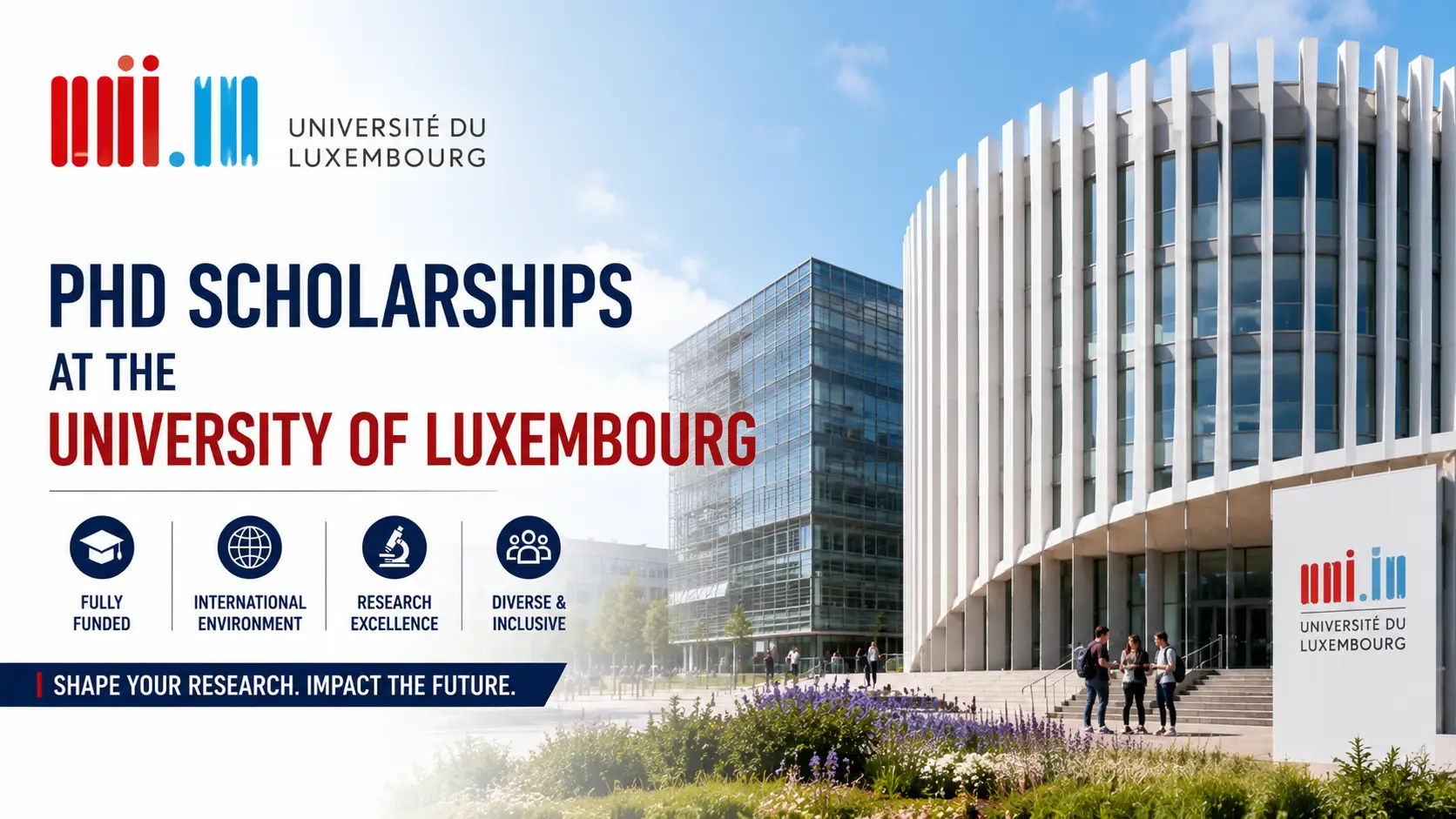
PhD Scholarships at the University of Luxembourg
In the heart of Europe, nestled between Germany, France, and Belgium, lies the Grand Duchy of Luxembourg, a nation known for its economic stability, multicultural society, and commitment to innovation. At the forefront of this intellectual landscape stands the University of Luxembourg. Established in 2003, it is a young yet rapidly ascending institution that has carved a niche for itself as a premier destination for doctoral research. For ambitious scholars seeking a dynamic, international, and well-funded environment to pursue their doctorate, the University of Luxembourg offers exceptional opportunities through its structured PhD programmes.
Unlike many traditional academic systems where doctoral candidates struggle with uncertain funding or classify themselves merely as students, the University of Luxembourg adopts a progressive model. PhD candidates are typically employed by the university. This means that securing a PhD position is akin to securing a professional job, complete with a competitive salary, social security benefits, and paid leave. This employment-based approach removes the financial barriers often associated with higher education, allowing researchers to focus entirely on their scientific contributions.
This article serves as an exhaustive guide to pursuing PhD scholarships and positions at the University of Luxembourg. It delves into the unique structure of the university’s Doctoral Schools, details the specific programmes available across science, humanities, law, and economics, and outlines the funding benefits, eligibility criteria, and application processes. Whether you are a recent master’s graduate or an experienced researcher looking to specialize, understanding the ecosystem at the University of Luxembourg is the first step toward a successful academic career.
Check: PhD Positions at Chalmers University of Technology, Sweden
The Doctoral School Ecosystem
The University of Luxembourg organizes its doctoral training through four distinct Doctoral Schools. This structure ensures that each candidate receives specialized support tailored to their discipline while benefiting from the university’s overarching interdisciplinary ethos. Each Doctoral School manages its own doctoral programmes (DPs), policies, and procedures, and is responsible for the recognition and validation of ECTS credits. This decentralized yet coordinated system allows for flexibility and high-quality training.
1. Doctoral School in Science and Engineering (DSSE)
The DSSE is dedicated to training the next generation of scientists. As the prompt notes, “In a young university, set in an international environment, our doctoral school is constantly evolving.” This school is ideal for candidates interested in hard sciences, technology, and engineering. It offers a wide array of Doctoral Programmes, each leading to specific diploma titles that are recognized across the European Higher Education Area.
- DP Systems and Molecular Biomedicine: Leads to a Doctorat en Sciences Exactes et Naturelles (Natural Sciences). This programme focuses on the intersection of biology, medicine, and systems analysis.
- DP Physics and Materials Science: Also leads to a Doctorat en Sciences Exactes et Naturelles (Natural Sciences). Researchers here explore fundamental physics and advanced materials.
- DP Mathematics and Applications: Leads to a Doctorat en Sciences Exactes et Naturelles (Natural Sciences), covering pure and applied mathematics.
- DP Complex Systems Science: A unique interdisciplinary programme that can lead to either a Doctorat en Sciences de l’Ingénieur (Engineering Sciences) or a Doctorat en Sciences Exactes et Naturelles (Natural Sciences), depending on the focus.
- DP Engineering Sciences: Leads to a Doctorat en Sciences de l’Ingénieur (Engineering Sciences), focusing on practical engineering challenges.
- DP Computer Science and Computer Engineering: Leads to a Doctorat en Informatique (Computer Science and Computer Engineering), catering to the growing demand for expertise in software and hardware systems.
2. Doctoral School in Humanities and Social Sciences (DSHSS)
The DSHSS offers a supportive multidisciplinary and multinational environment with a flexible approach to training portfolios. This school is perfect for researchers interested in society, culture, human behavior, and education. The diversity of programmes reflects the complexity of human interaction.
- DP Humanities: This broad programme allows for specialization leading to diplomas such as Doctorat en Sciences Humaines (Humanities), Doctorat en Histoire (History), Doctorat en Lettres (Literature), Doctorat en Science du Langage (Linguistics), or Doctorat en Philosophie (Philosophy).
- DP Education: Leads to a Doctorat en Sciences de l’Éducation (Educational Sciences), focusing on pedagogy and learning systems.
- DP Psychology: Leads to a Doctorat en Psychologie (Psychology), covering clinical, cognitive, and social psychology.
- DP Social Sciences: A versatile programme offering diplomas in Doctorat en Sciences Sociales (Social Sciences), Doctorat en Géographie (Geography), Doctorat en Architecture (Architecture), Doctorat en Sciences Politiques (Political Sciences), or Doctorat en Sociologie (Sociology).
3. Doctoral School of Law (DSL)
The DSL offers a quality research environment, providing the best conditions for advanced training of doctoral candidates in law at the University of Luxembourg. Given Luxembourg’s status as a hub for European institutions and international law, this school is particularly prestigious.
- DP Law: The sole programme in this school leads to a Doctorat en Droit (Law). Research here often intersects with European law, financial law, and international regulatory frameworks.
4. Doctoral School in Economics, Finance and Management (DSEFM)
The DSEFM is the joint doctoral school of the Department of Economics and Management (DEM) and the Department of Finance (DF). It bridges the gap between theoretical economics and practical financial management.
- DP Economics and Management Sciences: Candidates can earn a Doctorat en Sciences Economiques (Economics) or a Doctorat en Sciences de Gestion (Management).
- DP Finance: Specialized for those focusing on financial markets, leading to a Doctorat en Finance (Finance).
Funding and Employment Model
One of the most attractive features of pursuing a PhD at the University of Luxembourg is the funding model. As previously mentioned, most PhD candidates are hired as employees under a fixed-term contract. This is distinct from scholarship models in other countries where students might receive a stipend that does not count toward pension or social security.
Salary and Benefits
PhD candidates at the University of Luxembourg are typically classified as “Doctoral Candidates” (PRIME programme or standard contract). The gross annual salary is competitive, often starting around €38,000 to €42,000 per year, depending on the specific project and funding source. This salary is designed to cover the cost of living in Luxembourg, which, while high, is manageable with this income level.
Benefits included in the employment contract are comprehensive:
- Social Security: Full coverage under the Luxembourg social security system, including health insurance, pension contributions, and unemployment insurance.
- Paid Leave: Employees are entitled to paid annual leave (typically 25 days per year) and public holidays.
- Research Budget: Many positions include a budget for conferences, workshops, and fieldwork, ensuring candidates can network and present their research internationally.
- Training: Access to the Doctoral School’s training programmes, which include soft skills workshops, teaching training, and research methodology courses.
Duration
The standard duration of a PhD contract is three years, extendable to four years in certain cases. This fixed timeline encourages efficient research management and timely completion of the thesis. The employment model ensures that candidates are integrated into the university’s staff, fostering a sense of belonging and professional identity from day one.
Eligibility and Admission Requirements
To be considered for a PhD position at the University of Luxembourg, applicants must meet specific academic and administrative criteria. The competition is international, so meeting the baseline requirements is essential.
Academic Qualifications
The primary requirement is a Master’s degree (or equivalent) in a field relevant to the PhD project. The degree must be recognized by the University of Luxembourg. In terms of grades, applicants generally need a strong academic record. While there is no strict GPA cutoff published universally, a grade average that demonstrates research potential is expected. For some programmes, particularly in Law or Economics, a specific background in those disciplines is mandatory.
Language Proficiency
The University of Luxembourg is multilingual. The working language for most research projects is English. However, depending on the Doctoral School, knowledge of French or German may be beneficial or sometimes required, particularly for teaching duties or specific legal research.
- English: Proficiency is mandatory. If your previous degrees were not taught in English, you may need to provide IELTS or TOEFL scores.
- French/German: While not always mandatory for admission, having a working knowledge of these languages helps with integration into the local community and broader academic collaboration within the Greater Region.
Research Proposal
For advertised projects, you typically do not need to write a new proposal from scratch; instead, you must demonstrate how your background fits the existing project description. However, for open applications or specific fellowships, a detailed research proposal (3-5 pages) outlining your research question, methodology, and expected impact is required.
The Application Process: Step-by-Step
Applying for a PhD at the University of Luxembourg is a formal process. Unlike some systems with annual intake cycles, PhD positions are advertised throughout the year as funding becomes available.
Step 1: Monitor Vacancies
PhD positions are advertised as job vacancies. It is crucial to regularly check the official recruitment portal. Positions are posted by specific research groups or departments.
Official Application Link: To view current PhD vacancies and submit applications, you must visit the official University of Luxembourg recruitment website.
Link: https://recruitment.uni.lu/
Additionally, you can find general information about PhD studies on the university’s research page:
Link: https://wwwen.uni.lu/research/phd
Step 2: Prepare Your Documents
A complete application usually consists of the following documents:
- Cover Letter: Tailored to the specific project. Explain your motivation and fit.
- Curriculum Vitae (CV): Detailed account of your education, publications, and skills.
- Degree Certificates: Scanned copies of your Bachelor’s and Master’s diplomas and transcripts.
- Research Statement: If required, outlining your past and future research interests.
- References: Contact details for two or three academic referees.
Step 3: Submission
Applications are submitted digitally through the link provided in the job advertisement on the recruitment portal. Ensure all files are in PDF format. Late applications are generally not accepted.
Step 4: Assessment and Interview
Once the deadline passes, a selection committee reviews the applications. Shortlisted candidates are invited for an interview. This may be conducted via video conference or in person. The interview assesses your research potential, communication skills, and fit with the team.
Step 5: Contract and Onboarding
If successful, you will receive an employment contract. The HR department will guide you through the onboarding process, which includes obtaining a social security number and settling into Luxembourg.
Life as a PhD Candidate in Luxembourg
Living in Luxembourg offers a unique experience for researchers. The country is one of the safest and wealthiest in the world, with a high quality of life.
Multicultural Environment
Luxembourg is home to over 170 nationalities. As a PhD candidate, you will work in an environment where English is the lingua franca, but French, German, and Luxembourgish are spoken daily. This multicultural exposure is invaluable for building an international network. The University of Luxembourg itself has a very high percentage of international staff and students, fostering an inclusive atmosphere.
Cost of Living and Housing
Luxembourg has a high cost of living, particularly regarding housing. Renting an apartment in Luxembourg City or nearby areas can be expensive. However, the PhD salary is adjusted to reflect this. The university often provides assistance or guidance on finding accommodation. Many PhD candidates choose to live in neighboring countries (France, Germany, Belgium) where rent is lower and commute to the university, taking advantage of the free public transport system available to all residents in Luxembourg.
Work-Life Balance
The employment model promotes a healthy work-life balance. With regulated working hours and generous leave policies, PhD candidates are encouraged to maintain personal well-being. The compact size of the country means you can easily travel to nearby major European cities like Paris, Brussels, or Cologne during your weekends or holidays.
Career Prospects
Completing a PhD at the University of Luxembourg opens doors to various career paths. The university’s strong links with industry, particularly in finance, law, and technology, facilitate transitions into the private sector. Many graduates find roles in European institutions located in Luxembourg, such as the European Court of Justice or the European Investment Bank. For those aiming for academia, the international reputation of the university and the publication support provided during the PhD enhance prospects for postdoctoral positions globally.
Strategic Tips for Success
To maximize your chances of securing a PhD position at the University of Luxembourg, consider the following advice:
- Tailor Your Application: Do not send generic applications. Read the job description carefully and highlight the specific skills mentioned (e.g., specific programming languages for DSSE or legal frameworks for DSL).
- Highlight International Experience: Given the university’s international mission, emphasize any previous study abroad, international collaborations, or language skills in your CV.
- Contact Potential Supervisors: While not always mandatory, sending a polite email to the contact person listed in the vacancy can demonstrate initiative. Ask specific questions about the research project.
- Prepare for the Interview: Be ready to discuss your Master’s thesis in depth. The committee will want to see that you have the endurance and critical thinking skills required for a three-year project.
- Check Visa Requirements: If you are a non-EU citizen, start the visa process early once you receive an offer. The university’s international office will assist, but administrative processes take time.
Conclusion
The University of Luxembourg represents a unique opportunity for doctoral researchers who seek a blend of academic excellence, financial security, and international exposure. The structured approach of the four Doctoral Schools ensures that candidates receive specialized training whether they are studying molecular biomedicine, European law, or social sciences. The employment-based model sets a high standard for researcher welfare, allowing PhD candidates to focus on innovation without the stress of financial instability.
The diversity of programmes, from Complex Systems Science to Educational Sciences, reflects the university’s commitment to interdisciplinary research. By joining the University of Luxembourg, you become part of a vibrant community that values knowledge creation and societal impact. The path to securing a position requires preparation and persistence, but the rewards—a recognized doctorate, professional experience, and life in the heart of Europe—are substantial.
If you are ready to take the next step in your academic career, we encourage you to explore the current vacancies. The University of Luxembourg is looking for the next generation of scientists, lawyers, economists, and humanists to shape the future. Prepare your documents, refine your research interests, and embark on a journey of discovery in one of Europe’s most dynamic research environments.
Ready to apply? Visit the official recruitment portal today:
https://recruitment.uni.lu/
For more information on Doctoral Schools and programmes:
https://wwwen.uni.lu/research/phd
Embark on your PhD journey at the University of Luxembourg, where your research can make a global impact.